))
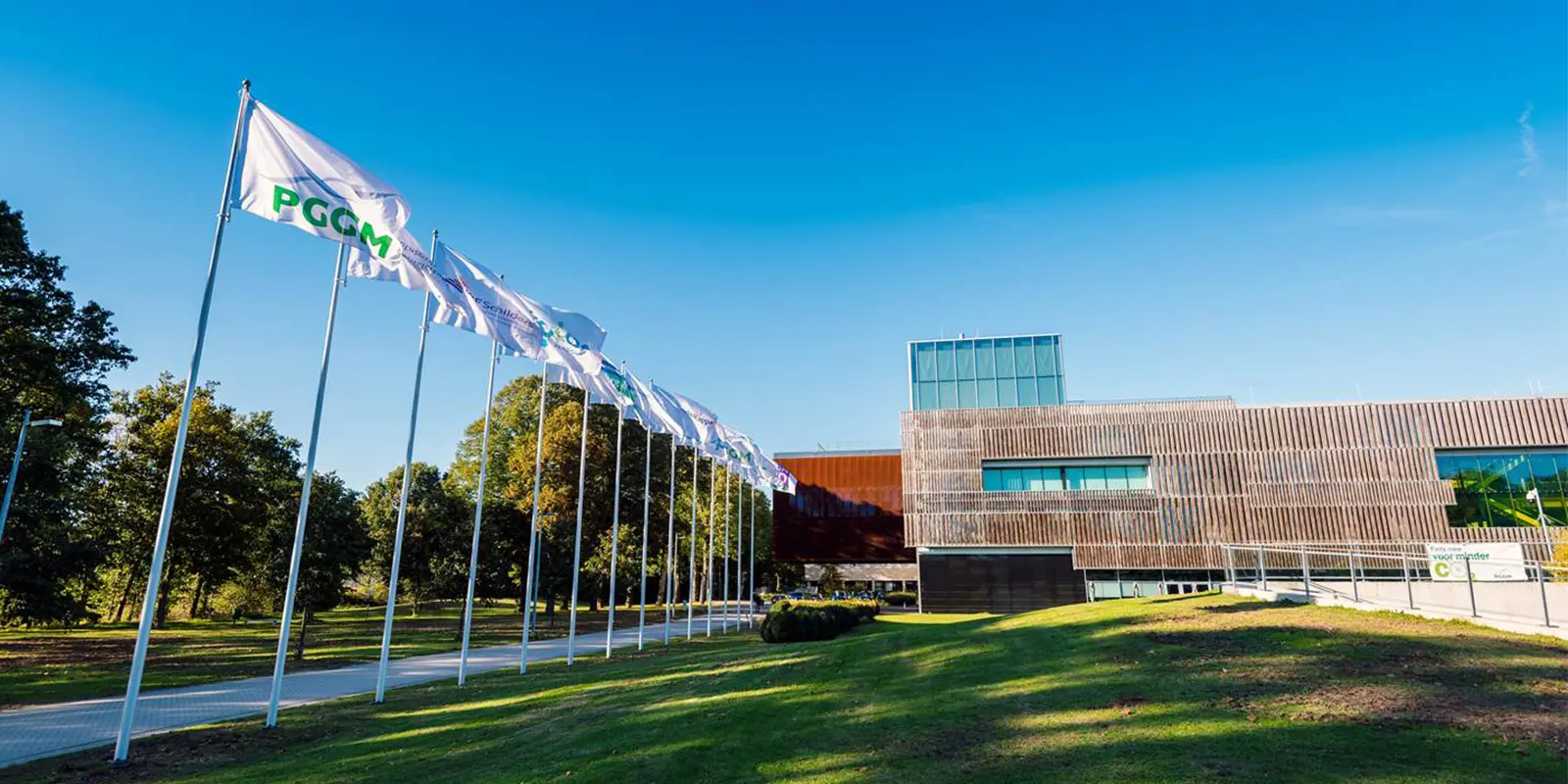
PGGM is one of the largest pension administrators in the Netherlands. The organisation manages approximately €249 billion in assets and administers pensions for 5.6 million participants. Every year, PGGM processes €9.8 billion in pension contributions for approximately 93,000 employers.
At this scale, accounts receivable management is a business-critical process. Reliable contribution processing requires up-to-date data, robust processes and an IT landscape capable of handling high volumes efficiently. This was exactly where PGGM’s existing setup was increasingly reaching its limits.
An increasingly complex landscape
For many years, PGGM managed its accounts receivable process using a financial system that had not originally been designed for this purpose. According to Henry Dikkema, Director of Pension Administration at PGGM, the limitations of this approach became increasingly apparent:
“Because the previous system was not a dedicated accounts receivable management solution, we needed more and more peripheral systems to keep the process workable. This resulted in a high level of manual intervention, increased risk of errors and an IT architecture that was no longer sustainable.”
There were functional limitations too. PGGM had only limited scope to differentiate between customer groups, while employers increasingly expected communication and follow-up to reflect their specific requirements.
At the same time, PGGM wanted to modernise its IT architecture. Rebuilding the existing environment would once again have required significant investment and custom development. It was therefore a logical moment not only to replace the system, but to redesign the accounts receivable process as a whole.
A deliberate choice for specialist software
PGGM took a thorough approach to selecting a new solution. Seven to ten providers were invited to participate in the initial selection round, followed by a Request for Proposal involving three parties. PGGM then held in-depth sessions on processes, IT and finance with two of them. Ultimately, the organisation selected FIQAS and Abillity®.
The decision was about more than functionality. PGGM wanted software developed specifically for accounts receivable management, capable of supporting its modern target architecture and continuing to evolve over time. Compliance and digital operational resilience also carried significant weight.
Henry explains: “We were looking for a true specialist in accounts receivable management. Not an accounting package, but software designed specifically for this purpose. We also wanted to be part of an established customer base, so we could be confident that compliance requirements such as DORA were properly addressed.”
From multiple applications to one central solution
The implementation of Abillity® fundamentally changed PGGM’s architecture. Where seven separate applications had previously been required for different parts of accounts receivable management and collections, Abillity® now plays a central role in these processes.
Surrounding systems, including portals, CRM, BI and ERP, remain part of the landscape, but the exchange of information has been modernised. A significant proportion of data exchange now takes place via APIs.
The change goes beyond application rationalisation. PGGM also established much clearer ownership of data.
“Previously, it was not always clear which of the different systems contained the definitive version of the data. Now there is one source of truth: the data in the source systems,” says Henry.
Employees in the collections team no longer amend data from other systems within the accounts receivable process. If information is incorrect, it must be corrected at source. This ensures that the same information remains leading throughout the entire chain.
Data quality as a foundation for automation
This approach enables further automation. Because incoming data no longer needs to be corrected manually first, PGGM can run processes directly on the basis of source data. Responsibility for data quality is managed at source-system level, allowing processing to take place more consistently.
PGGM therefore identifies a high level of straight-through processing (STP) as one of the key results of the new landscape.
Standardising without sacrificing scalability
From the outset, FIQAS and PGGM agreed not to develop customer-specific functionality where a requirement could instead be addressed generically within the platform. Rob Geleijn, Managing Director of FIQAS: “Together, we looked beyond the initial request to understand the underlying need and developed generic features accordingly. What works for PGGM can now work for other customers too.”
This approach was put to the test during the project. Following the acquisition of MN Services’ pension administration activities, two large pension funds had to be added to Abillity®. Both were onboarded within just two months, without additional development time or technical modifications.
Henry: “That was the ultimate proof that we had built something robust.”
Standardisation therefore did not mean sacrificing flexibility. Because the solution does not depend on customer-specific customisation, PGGM was able to accommodate new volumes and processes without adding further technical complexity.
Less complexity, more robust processes
PGGM identifies three key results from the transformation:
- rationalisation and simplification of the IT landscape;
- robust processes with a high level of STP;
- a future-ready application and modern information exchange with other systems.
PGGM rationalised and simplified its IT landscape. Several older applications could be phased out, information has been further standardised and manual processing has been significantly reduced. The technical architecture is designed around modern integration standards and further automation.
“We now work with one robust system that does what it needs to do. More importantly, the system is future-ready.”
Henry Dikkema, Director of Pension Administration at PGGM
End users involved from the outset
A new technical setup also requires a different way of working. PGGM therefore involved employees from the collections team in the project from the outset. They were able to contribute to the design and subsequently help colleagues adopt the new way of working.
According to Herjan Schoonbeek, Manager of Collections and Invoicing at PGGM, new users quickly became familiar with the system: “New colleagues find the system intuitive and quick to learn.”
For experienced employees, the new approach sometimes required more adjustment. Where they had previously been able to amend data or intervene in the process themselves, a much larger proportion of processing now takes place automatically. The main adjustment was therefore not learning to use Abillity®, but letting go of familiar ways of working.
A future-ready foundation for pension contribution collection
PGGM’s experience shows that modernising a system within a complex financial process is never just about software. Processes, data sources, integrations, responsibilities and working practices are closely interconnected. PGGM explicitly identifies this hidden complexity as one of the key lessons from the project.
With Abillity®, PGGM has redesigned the foundation of its accounts receivable and pension contribution collection processes: reducing application complexity, establishing clear responsibility for data quality, increasing automated processing and creating an architecture on which the organisation can continue to build.
PGGM therefore did more than simply replace a legacy system. It created a robust and scalable foundation for a business-critical process that handles €9.8 billion in pension contributions every year.